What Is a Photo Essay? Structure and Examples
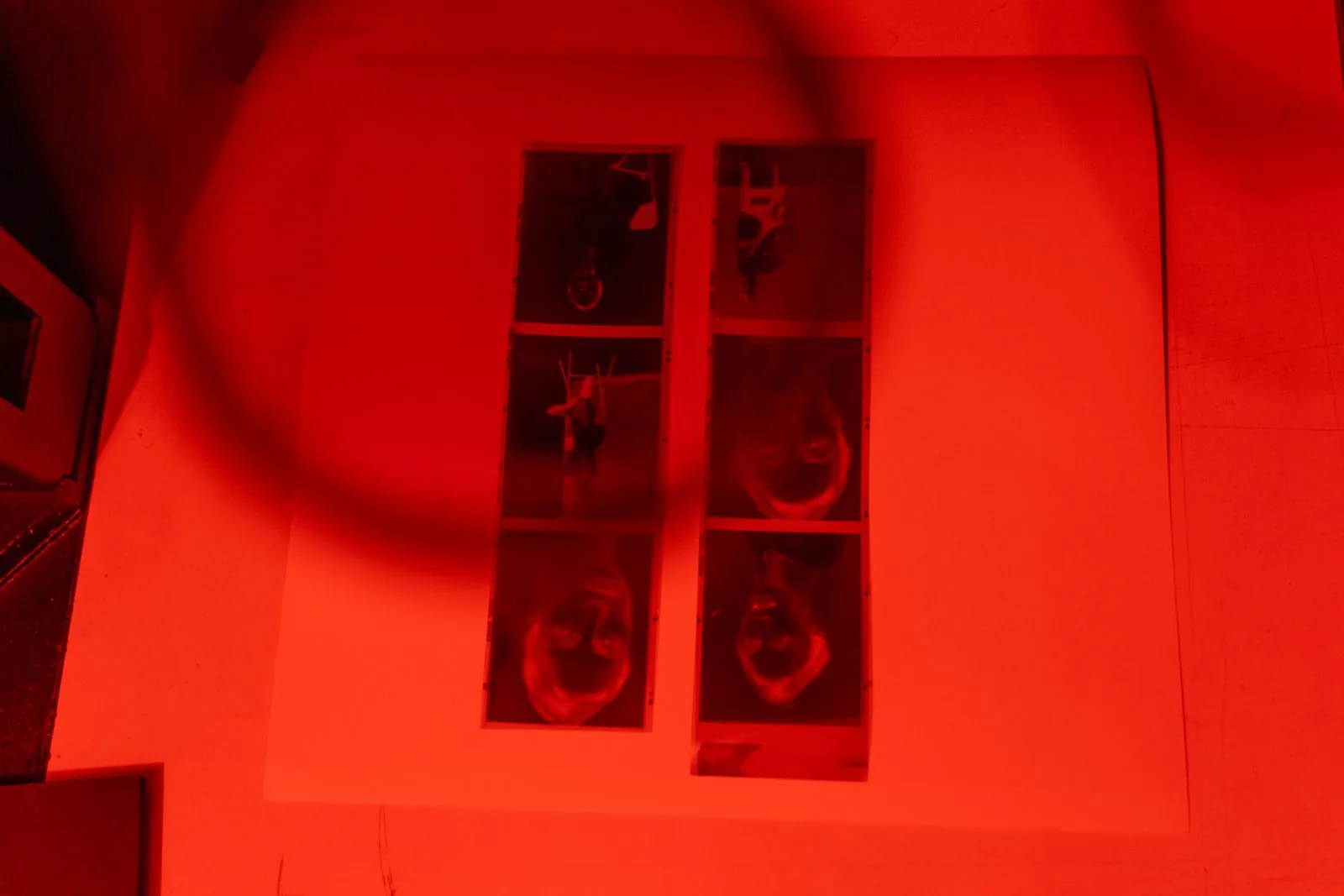
A photo essay is a set of photographs arranged in a deliberate order so that the group says something the individual pictures cannot. The order is the argument. That is the whole idea, and it is why an essay can be built from quiet pictures while a single dramatic frame is not an essay at all.
A working definition
Three things have to be true before a group of photographs becomes an essay. There is a subject that can be stated in one sentence. There is a sequence, with a first picture and a last picture chosen on purpose. And there is a point of view: the photographer is making a case about the subject, not simply supplying coverage of it. Remove any one of those and you have something else, which is not a criticism, only a different job.
The term became common in American magazines in the middle of the twentieth century, when the weekly picture press had the pages to run a dozen or more photographs on one subject. LIFE's own account of W. Eugene Smith's 1948 story Country Doctor calls it an instant classic that established Smith as a master of what it describes as the commanding young art form of the photo essay. That is a useful marker for when the form acquired its name.
How it differs from reportage and from a series
A news picture story answers to an event. Its order follows the event, its captions supply the facts a reader needs, and its lifespan is tied to the news cycle. A photo essay answers to a question the photographer has chosen, and it can be made over months or years about something that is not news at all.
A series is different again. In a series, the pictures are variations on one formal idea, and they are usually interchangeable: shuffle twenty portraits made to the same rules and nothing breaks. In an essay, the position of each picture matters, because meaning accumulates. If you can reorder your sequence at random without loss, you have a series. That is worth testing before you call something an essay.
Structures that actually work
Most working essays use one of a small number of structures, often in combination.
- Time. A day, a shift, a season or a life. Country Doctor follows a single physician through the work of a small town, and the structure needs no explanation to the reader.
- Place. The subject is one defined space, and the sequence moves through it from outside to inside, or from public to private.
- One person, with context. Portraits alternate with details, rooms, hands and objects, so the reader learns the person through their surroundings.
- Before and after. Two states of the same subject, with the turning point either shown or deliberately withheld.
- Accumulation. Repetition of one kind of picture until the volume becomes the point, closed by a frame that breaks the pattern.
Whatever the structure, the practical rules are the same. The opening picture states the subject. The second and third pictures establish where you are. Scale alternates, so wide and close do not clump together. The last picture closes the sequence without summarising it. And the strongest single frame usually belongs in the second half, because a sequence that peaks at the start reads as a decline.
Captions and text
Essays carry text, and the text has a defined job: supply the facts the picture cannot, and nothing else. Names, places, dates, what is happening, why it matters. A caption that tells the reader what to feel is working against the photograph beside it. In book-length work the same logic applies to the essay or afterword, which is where context, method and dates belong, leaving the sequence to do the rest.
Accuracy in the text is also where essays are most easily broken. LIFE's own account of Smith's Schweitzer story, published in November 1954 as A Man of Mercy, notes that he built the lead image by combining elements from two negatives, which contravened the magazine's photojournalistic guidelines. The pictures were real and the reporting was serious, and the compositing is still what the record now remembers. The LIFE article sets out what was done.
Examples worth studying
W. Eugene Smith, Country Doctor, LIFE, 1948. Smith spent 23 days in Kremmling, Colorado, with Dr Ernest Ceriani, and the published essay follows the doctor through consultations, surgery, accidents and exhaustion. It is the standard reference for the single-subject, single-place structure. See LIFE's own presentation of the story.
W. Eugene Smith, Nurse Midwife, LIFE, 3 December 1951. About a dozen pages on Maude Callen, a nurse midwife working across a large rural district of South Carolina. It is also the clearest case of an essay producing a result: readers sent donations that eventually exceeded $20,000, which paid for a clinic in Pineville, where Callen worked until she retired in 1971. The details are in LIFE's account.
Gordon Parks, Harlem gang leader, LIFE, 1948. The Gordon Parks Foundation records that his 1948 photo essay on the life of a Harlem gang leader won him a position as the first African American staff photographer at the magazine, where he stayed for two decades. The essay is a study in access: the work depended on a relationship with its subject that no short assignment could produce. See the foundation's biography page.
Book-length essays. The form moved into photobooks as the picture magazines shrank. Celine Marchbank's Tulip, published by Dewi Lewis in 2016, runs 84 colour photographs across 152 pages on one subject, the last year of her mother's life. Dewi Lewis also publishes Pictures from the Garden, described by the publisher as a collection of seven photographic essays, by Vanessa Winship, Siân Davey, Matthew Finn, Nik Roche, Alex Schneideman, Jem Southam and Alys Tomlinson, each responding to Paddy Summerfield's work about his parents. The publisher's page names all seven and shows how an essay can be short, eight or ten pictures, and still be complete.
Essays with research in them. Alex Ingram's Valdeluz pairs photographs of a half-built Spanish town with a text that supplies the dates and figures: the rail scheme announced in 2004, construction halted by the 2008 crash, 197 residents in a town planned for more than 30,000, and a population that has since grown past 4,000. Neither half works alone. The sequence is on his site.
Common faults
Four problems account for most failed essays. The subject is too broad to state in a sentence, so the sequence becomes a tour. Every picture is a strong picture, so none of them can breathe. The edit is too long, usually by about a third. And the captions repeat what the reader can already see, which teaches the reader to stop reading them.
If you are building one, the work sits in selection and sequencing rather than in any single frame, and in knowing which editor the finished sequence is for. The talks archive shows how photographers presented long-form sequences here, in the order they chose to show them. The speakers index lists photographers whose long-form work is profiled on this site.
Photo Forum is an independent journal. We are not affiliated with the former PhotoForum talks group or with theprintspace, the venue that hosted its meetings. The historical details above are taken from the publications and institutions linked in the text, and the examples cited are published work by named photographers.