The Supernatural in Photography: History, Projects and Visual Devices
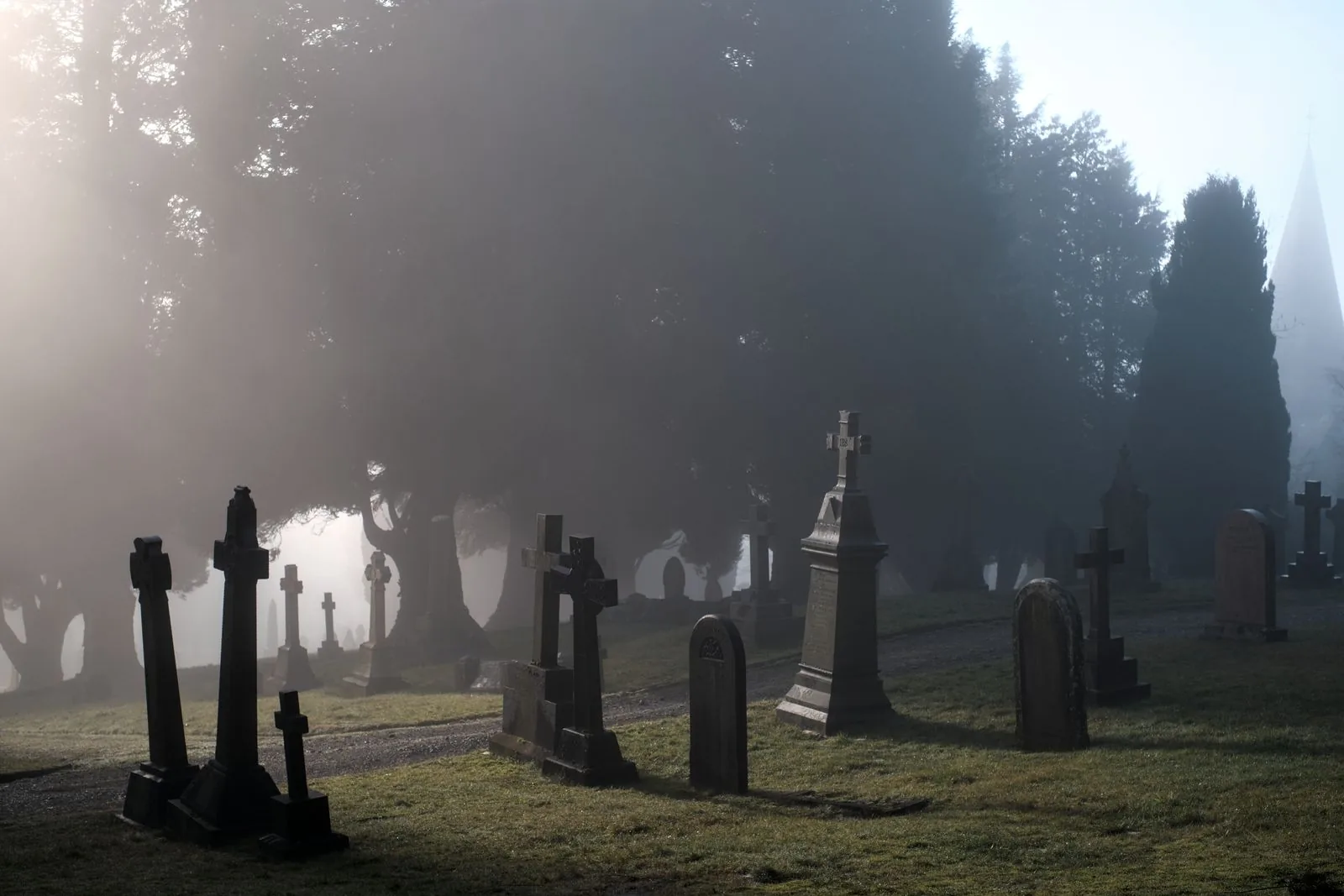
The supernatural has a long history in photography, and it is a history of technique and deception rather than of evidence. Every famous "spirit photograph" of the nineteenth and early twentieth centuries was made with ordinary darkroom methods, and in the best documented cases investigators showed exactly how. The subject is still worth studying, because the same devices that produced Victorian ghosts explain how photographs persuade people in general, and because belief itself remains a serious documentary subject.
Where spirit photography started
The trade began in Boston in the early 1860s with William H. Mumler, a jewellery engraver who practised photography as an amateur. A self-portrait he developed appeared to carry a second, faint figure, which was taken for a cousin who had died years earlier, and Mumler turned the effect into a business photographing the bereaved. He was tried for fraud in New York in 1869. The showman P. T. Barnum testified against him and commissioned the photographer Abraham Bogardus to produce a picture of Barnum himself accompanied by a "ghost" of Abraham Lincoln, to demonstrate how simple the trick was. Mumler was acquitted, because the prosecution could not prove in court how he had made the pictures. The best known image attributed to him, a portrait of Mary Todd Lincoln with an apparent apparition of her husband, has long been explained as a double exposure. The case, with its original sources, is summarised in his Wikipedia entry.
Demand for this kind of picture rose sharply after the First World War, for obvious reasons. The best documented British example is William Hope, born in Crewe in 1863, who worked as a carpenter and became interested in spirit photography in 1905 after a photograph of a friend seemed to show a figure that should not have been there. Hope founded and led a group of six spirit photographers known as the Crewe Circle, and by 1922 he had moved to London and set up as a professional medium. The Public Domain Review's set of his surviving photographs is the easiest place to see the work itself. The Science Museum Group holds an album of 19 gelatin silver print postcards by Hope, catalogued as the Album of Crewe Spirit Circle and dated 1910 to 1930.
How the ghosts were made
The techniques were not exotic. A glass plate already carrying a faint image could be re-used, so the second sitter was recorded on top of the first. A short second exposure, with an assistant draped in white and moved during the exposure, produced a translucent figure in the same frame. Combination printing, using two negatives under one sheet of paper, allowed a face to be dropped into a portrait in the darkroom. All three methods were standard parts of the trade by the 1860s, which is why photographers of the period were the first to call the spirit pictures out.
The decisive test came in 1922, when the Society for Psychical Research sent the investigator Harry Price to sit with Hope. Price's conclusion was that Hope substituted his own prepared plates for the sitter's, and he published that finding the same year. Hope's supporters rejected it. The most prominent of them was Arthur Conan Doyle, who replied with a book, The Case for Spirit Photography. Hope went on working until his death in 1933. The account above follows the Public Domain Review's summary of the episode.
The other British case of the period involved no medium at all. In 1917 two cousins in Cottingley, near Bradford, Elsie Wright and Frances Griffiths, photographed what appeared to be fairies in a garden and a stream. The figures were drawings by Elsie, "secured in the ground and to branches with hatpins", as the National Science and Media Museum puts it. Conan Doyle publicised the pictures, with an article in the Christmas 1920 edition of The Strand Magazine, and almost certainly invented the name "Alice" to protect the girls' identities. The cousins kept the method secret until the 1980s. In a letter to the photographic journalist Geoffrey Crawley in 1983, Elsie stated that all five photographs were faked; Frances maintained to the end of her life that the one she took herself was genuine. The museum's own account is in its post on the Cottingley Fairies and image manipulation.
The objects are still in a museum
This history is unusually easy to verify because the hardware survives. The National Science and Media Museum in Bradford holds the 'Midg' camera used to make the first two Cottingley photographs in 1917 and the quarter-plate Cameo camera used for the later set of 1918 to 1920, along with Elsie's 1983 letter. It also holds the Marjorie Curtis Collection, assembled by the girls' aunt, which contains press cuttings, publications and family photographs relating to the case. Ghosts as paid entertainment are in the same collection: a magic lantern slide catalogued as "Graveyard Ghost", dated between 1800 and 1899, belongs to the era's commercial phantom shows rather than to any claim of evidence.
Belief as a documentary subject
None of this makes the supernatural a dead topic for photographers. It changes the subject from the apparition to the people and the practice, which is where serious contemporary work sits. Shannon Taggart spent eighteen years photographing Spiritualist communities, beginning in 2001 at Lily Dale in New York State and later at Arthur Findlay College in England. The book, SÉANCE, was published by Atelier Éditions with a foreword by Dan Aykroyd and essays by Andreas Fischer, J. F. Martel and Tony Oursler, and TIME named it one of the best photobooks of 2019. She also wrote a five-part series on photography and the invisible for the Walker Art Center's magazine. Her own site carries the publication record.
Belief is a British documentary subject too, including the absence of it. Briony Campbell's film Between Beliefs and her exhibition Beyond Belief, shown at Conway Hall in London in 2024, came out of public engagement work funded by the Understanding Unbelief programme in 2018 and the Explaining Atheism programme at the University of Kent in 2024, as her biography page records. Work of that kind reports on what people do and why, without the photographer being asked to adjudicate the metaphysics.
What the history teaches about pictures
The useful lesson is not about spirits. It is that a photograph's authority comes from the viewer's assumptions about how it was made, and that those assumptions can be exploited with very simple means. The Cottingley case is a children's prank that convinced a famous novelist for years. Hope's plates were defeated only when someone marked them in advance. The modern equivalents, from composited news pictures to generated images, work on the same gap between what a picture shows and what the audience assumes about its making, which is why the ethics of captioning and processing matter more than the equipment.
Further reading on this site: the profiles of Alys Tomlinson and Liz Hingley cover documentary work on faith and ritual, and the profile of Briony Campbell covers her participatory films in more detail.
Photo Forum is an independent journal. We are not affiliated with the former PhotoForum talks group or with theprintspace, the venue that hosted its meetings. This page describes historical hoaxes and the techniques used to produce them, and it makes no claim that any photograph has ever recorded a spirit. Sources are linked throughout.