Photographing Mothers and Family: Celine Marchbank and Matthew Finn
Photographs of mothers are among the most common pictures ever made and among the hardest to publish well. Two British photobooks show why: Celine Marchbank's Tulip, made in the last year of her mother's life, and Matthew Finn's Mother, made over three decades in one house in Leeds. Both are published work, both are documented by their publisher, and both are useful if you are trying to understand how a family project becomes a book rather than an album.
Celine Marchbank: Tulip
Marchbank is a British photographic artist who works with photography and text, and a senior lecturer in photography at Falmouth University since 2020. Tulip, her first monograph, was published by Dewi Lewis Publishing in 2016 and, in her own description, "documents the final year of her mother's life". Her mother was Sue Miles. The publisher's page dates the diagnosis to 2009 and records her decision to photograph the time her mother had left rather than the dying itself. The book runs to 152 pages with 84 colour photographs in a clothbound hardback.
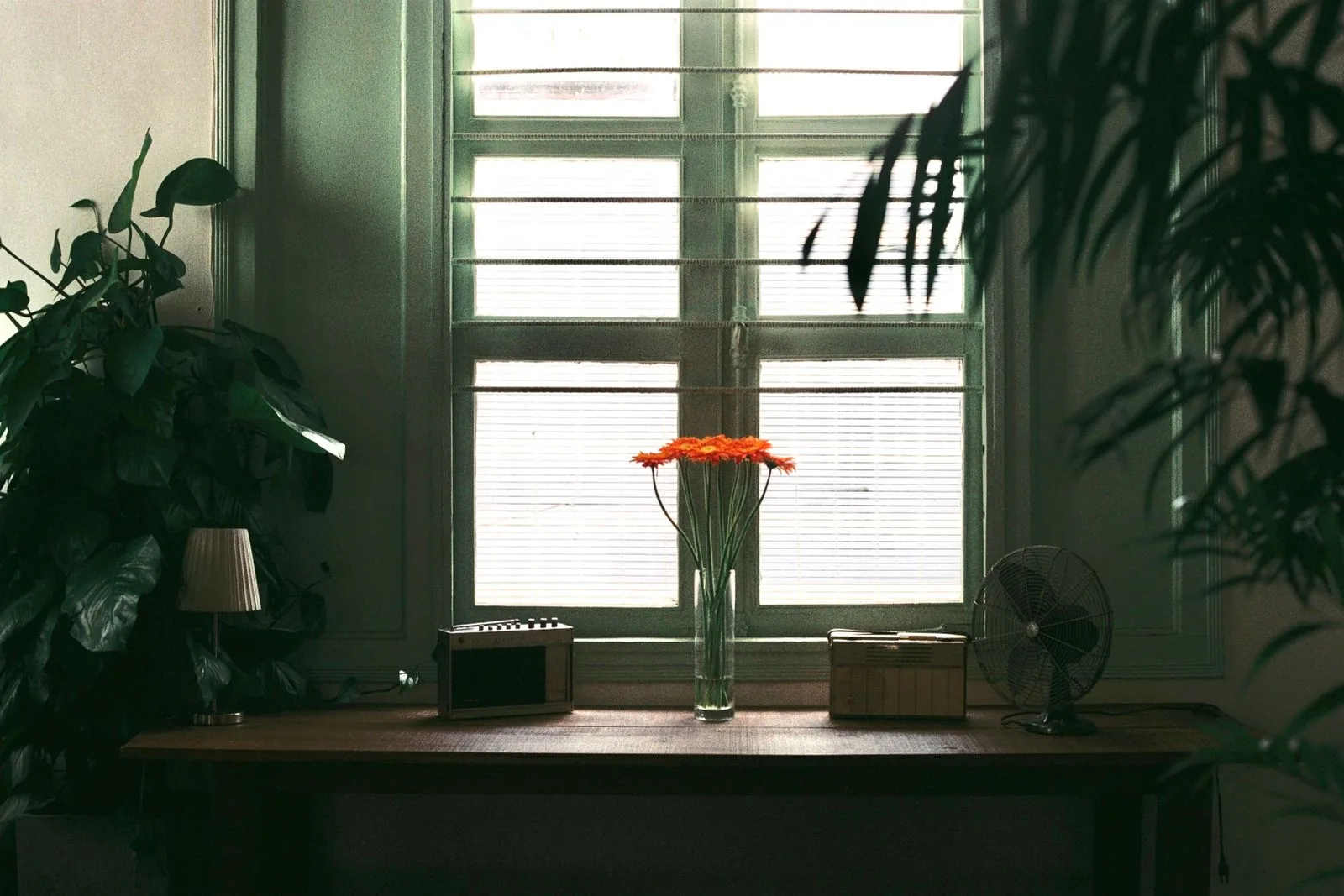
The visual device that holds it together is flowers. Her mother's house was full of them, and in the sequence they carry both affection and decay without the photographer having to narrate either. Reviewers treated the book as a serious piece of work rather than a private memorial: the Observer named it photobook of the month, photo-eye made it photobook of the week, and it was a selected winner in the Creative Review Photography Annual. The publisher's page for Tulip lists those notices, and her own biography page adds the coverage that followed in BBC News and the Guardian.
Her second monograph, A Stranger in My Mother's Kitchen, came out with the same publisher in 2022 and takes a different route into the same subject. It combines photographs, her writing and her mother's recipe archive, and uses cooking as the thing that makes the loss concrete. It was shortlisted for the Kraszna-Krausz Photography Book Award, and the work was shown at the V&A Photography Centre in London in 2024.
Matthew Finn: Mother
Finn began photographing his mother, Jean, in her Leeds home in 1987 and continued for about thirty years. Mother, published by Dewi Lewis with an essay by the visual and historical anthropologist Elizabeth Edwards, collects the portraits in 96 pages. The publisher's description follows the arc: her daily routine, her move from middle age to old age, a diagnosis of mixed dementia and a move into residential care. Finn's own line about the late pictures is the sharpest thing in the book's apparatus: "I no longer exist to her and she cannot recognise herself." The record is on the publisher's page for Mother.
What distinguishes it from a family album is duration and consistency. The same person, the same rooms and much the same framing, repeated for three decades, turn small changes into information. Nothing in the sequence depends on a dramatic frame. The subject of the work, in the end, is the relationship between the two people making it, which is also why the later pictures are difficult to look at.
The family project as a genre
These two books sit in a recognisable British line of work, and the examples are easy to check. Paddy Summerfield's Mother and Father, also published by Dewi Lewis, was photographed between 1997 and 2007, mostly in his parents' Oxford garden, with 83 duotone photographs following the last years of a sixty-year marriage through his mother's Alzheimer's. His summary of the project is a model of restraint: "I recorded my mother's loss of the world, my father's loss of his wife and, eventually, my loss of them both." The publisher's page gives the dates and the extent.
That book then produced another. Pictures from the Garden, published by Dewi Lewis, is a collection of seven photographic essays by Vanessa Winship, Siân Davey, Matthew Finn, Nik Roche, Alex Schneideman, Jem Southam and Alys Tomlinson, each made in response to Summerfield's work after visiting his house and garden in Oxford. It is a rare case of a family project being answered by other photographers in print, and the publisher's page names all seven.
Motherhood at the other end of life has its own strand. Jenny Lewis's One Day Young was published by Hoxton Mini Press as the fifth book in its East London Photo Stories series, a 112-page hardback of portraits made in Hackney, with a collector's edition issued as One Day Young In Hackney. The publisher's listing gives the editions. Set beside Tulip and Mother, it marks out the range of the genre: first days and last years, both photographed at home, both dependent on the subject's agreement.
What makes these projects work
Four practical things recur across all of the books above, and they are worth stating because they are what separates publishable work from a private archive.
- Duration. Finn worked for about thirty years, Summerfield for ten, Marchbank for one that was not hers to extend. In each case the length of the project, not the strength of any single frame, is what carries meaning.
- A visual device that does the emotional work. Flowers in Tulip, the garden in Mother and Father, the repeated room in Mother. The pictures stay plain because the structure is carrying the weight.
- Restraint in the text. The strongest statements in these books are one sentence long. There is no attempt to tell the reader what to feel.
- Consent that is renewed, not assumed. The subject is usually a parent who cannot easily refuse, and in the later stages of illness may not be able to agree at all. Every photographer here settled that question in public, by describing how the work was made.
If you are reading further on this site, our profiles of Briony Campbell and Natasha Caruana cover first-person documentary made inside a family, the profile of Jenny Lewis covers One Day Young in more detail, and Alys Tomlinson, one of the seven contributors to Pictures from the Garden, has a profile of her own.
Photo Forum is an independent journal. We are not affiliated with the former PhotoForum talks group or with theprintspace, the venue that hosted its meetings. No photographer named here has written or approved this page. All details above come from the publishers and the photographers' own sites, linked in the text, and we have deliberately kept private family detail to what those sources have already published.