Photographing England: Matt Writtle, John Angerson and Documentary Traditions
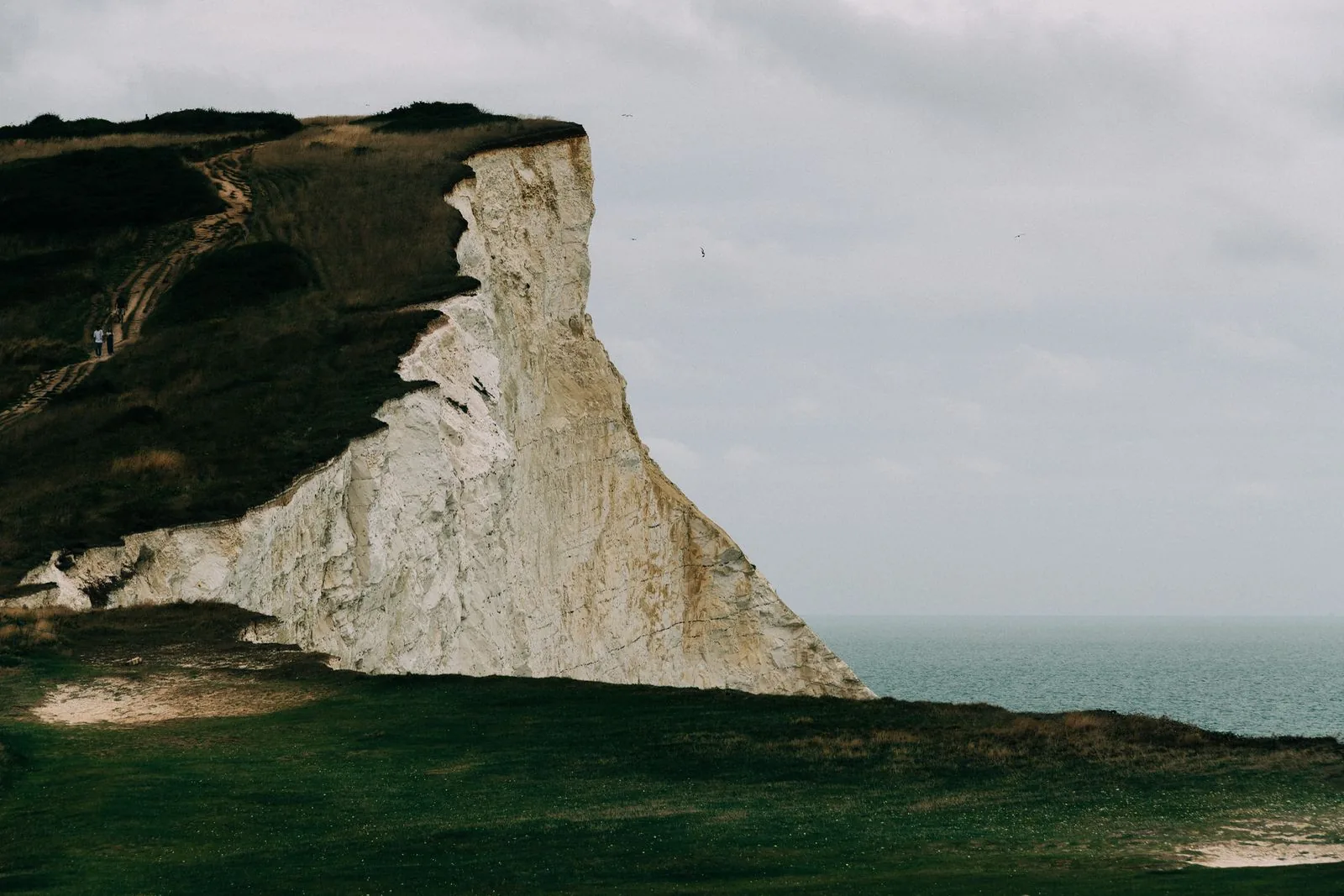
England has been photographed as a subject in its own right for more than half a century: its days off, its customs, its industrial decline and its suburbs. Matt Writtle and John Angerson both work in that line, one through books about rest, rivers and footpaths, the other by retracing a famous travel book of the 1930s. This article looks at what each of them has made, and at the documentary tradition they are working inside.
Matt Writtle
Matt Writtle describes himself on his own site as a UK documentary and portrait photographer from the Black Country, now based in the Chiltern Hills, who uses photography to document the cultural and environmental transitions of life over time.
His books take English subjects one at a time. Sunday: A Portrait of 21st Century England, from 2017, looks at how people in England now spend the traditional day of rest, across worship, leisure, shopping, sport and family time, and at what the decline of churchgoing has done to the shape of the week. The River Meadow at the Pile of Stones, from 2020, follows the River Chess, a chalk stream at Chesham in Buckinghamshire, and the pressure that urbanisation puts on it. Pathways: A Photographic Journey Along The Ridgeway, from 2024, was made for the fiftieth anniversary of the National Trail.
Alongside the personal books runs a long record of commissioned documentary work. His site lists The Estate We're In, made with the London Evening Standard, which was shortlisted for the Orwell Prize in 2016, along with Healthy Lives, Muslims in Britain and Children of Malawi. The project with the longest reach is Portraits for Posterity, photographs of Holocaust survivors in Great Britain, which he was approached to photograph in 2007 and which eventually recorded 101 survivors with their testimony, with the National Portrait Gallery among the partners named on his site. His listed awards include a silver medal for Sunday at the Budapest International Foto Awards in 2019, an honourable mention for Pathways at the Tokyo International Foto Awards in 2024, and campaign of the year at the British Press Awards in 2011 for The Dispossessed.
John Angerson
John Angerson describes himself on his site as a UK based documentary and portrait photographer. The projects listed there include English Journey, On This Day, Sustain, Lockdown Sanctuary, Sleeping Rough, Terminal Transit and Love Power Sacrifice, along with portrait work that includes sitters such as David Hockney and Peter Capaldi.
English Journey is the project that ties his work to the tradition most directly. It retraces the route of J. B. Priestley's English Journey, his published account of travelling through rural and industrial England in the 1930s. Writing in It's Nice That on 8 October 2019, Angerson is quoted on how the project started: he found a rare first edition of Priestley's book and knew instantly that he had to make a modern version of it. The article reports the series as captured over the preceding three years and published as a book under the same title. It was photographed with a deliberate mixture of registers: country cottages and farmyard animals alongside delivery van depots, a full day spent photographing nothing but the turf at Anfield after months of negotiating access, and a holiday complex he entered by checking in as a holidaymaker and then photographing surreptitiously. His summary of what had changed since the 1930s was that Americanisation and homogenisation had spread through nearly every town and city.
That is a specific methodological choice worth naming. Working to an existing route, written by somebody else ninety years earlier, removes the photographer's freedom to go where the pictures are easiest and forces the comparison to be made in public.
The English documentary line
Both bodies of work sit in a tradition with recognisable landmarks, and the useful thing for a photographer is that most of it is accessible in public collections.
Tony Ray-Jones
Tony Ray-Jones photographed English leisure and custom in the late 1960s with a dry, crowded frame in which several things happen at once. His book A Day Off: An English Journal was published posthumously by Thames and Hudson in 1974. His archive has been at the National Science and Media Museum in Bradford since 1993, when it was transferred by his daughter Anna Ray-Jones. The museum's archive record lists around 700 black and white prints, about 1,700 rolls of 35mm film, roughly 2,700 contact sheets and 600 boxes of transparencies, together with notebooks and press cuttings, and names three projects within it: A Day Off, Old English Customs and Extremists and Gurus.
Daniel Meadows
In 1973 and 1974 Daniel Meadows travelled Britain in a converted double decker bus, stopping in town after town to make free portraits of the people he met. His website at danielmeadows.co.uk presents 500 photographs and 40 videos and states that the Daniel Meadows Archive is housed in the Bodleian Libraries at the University of Oxford. The work matters here because of the bargain it struck: the subject received a print, and the photographer received the picture.
Chris Killip
Chris Killip's In Flagrante, published in 1988, documents what deindustrialisation did to working class communities in the north east of England. The Getty, which exhibited the making of the book and holds the photographs in it, describes it as a book of fifty photographs and as the most important photobook to document the devastating impact of deindustrialisation in the region, with the negatives dating from the 1970s and 1980s.
Simon Roberts
We English brought the Ray-Jones subject into the twenty first century. Roberts's own project page records that he made the work between 2007 and 2008, travelling England in a motorhome and photographing ordinary people at leisure on large format film, often from a distance so that landscape and figures are read together. Chris Boot published the book in 2009, and an exhibition opened at the National Media Museum in 2010 before touring.
Where the archives are
Access to this tradition is practical rather than theoretical. The National Science and Media Museum holds Ray-Jones through its research facility. The Bodleian holds Meadows. The Martin Parr Foundation describes itself as a gallery, library, studio and archive centre, and lists among its holdings the archives of David Hurn, Val Williams and Chris Killip, alongside a permanent print collection and book dummies.
What photographing England actually involves
Reading these projects together, a few working principles repeat.
- A constraint instead of a theme. A day of the week, a river, a national trail, a 1930s itinerary or a bus route all do the same job: they decide where the photographer goes, and the subject emerges from the pictures rather than being illustrated by them.
- Years, not weeks. Angerson's English route took about three years. Roberts spent a year on the road. Killip's negatives span more than a decade.
- Access is negotiated and is part of the story. Months of asking produced one day inside a football ground. A free print produced a portrait in 1973.
- The output is a sequence. Nearly all of this work was published as a book, because a single photograph of a country says very little and eighty of them in order can say a great deal.
For related reading, see our profiles of documentary photographers on the speakers page, the full events archive, the index of previous talks, and the guide to photography talks in London.
This page takes its address from a London photography talk listed for 29 November 2017. It is written as an article about the photographers and the genre rather than as a record of that evening. This site is an independent journal, is not affiliated with the former PhotoForum talks group or with theprintspace, and does not organise events.